If you’ve ever stood in a skincare aisle (or scrolled through a product page at midnight) wondering whether to grab the retinol serum or spring for a prescription-strength retinoid — welcome. You’re not confused because you haven’t done the research. You’re confused because the word “retinoid” is an umbrella term that covers a whole family of vitamin A derivatives, each one working differently in skin and each one sitting at a different rung of a potency ladder. Retinol (the form found in most over-the-counter serums) has to be converted by your skin into its active form before it does anything. Retinal — also called retinaldehyde — is one conversion step closer to active. Prescription tretinoin skips the conversion entirely and gets straight to work. For anyone trying to fade dark spots, post-inflammatory marks, or melasma, which rung you start on — and when you move up — can mean the difference between steady visible progress and months of frustration. This article lays out the full ladder, explains the tradeoffs at each level, and gives you a clear framework for matching the right retinoid to where your pigmentation actually is right now.
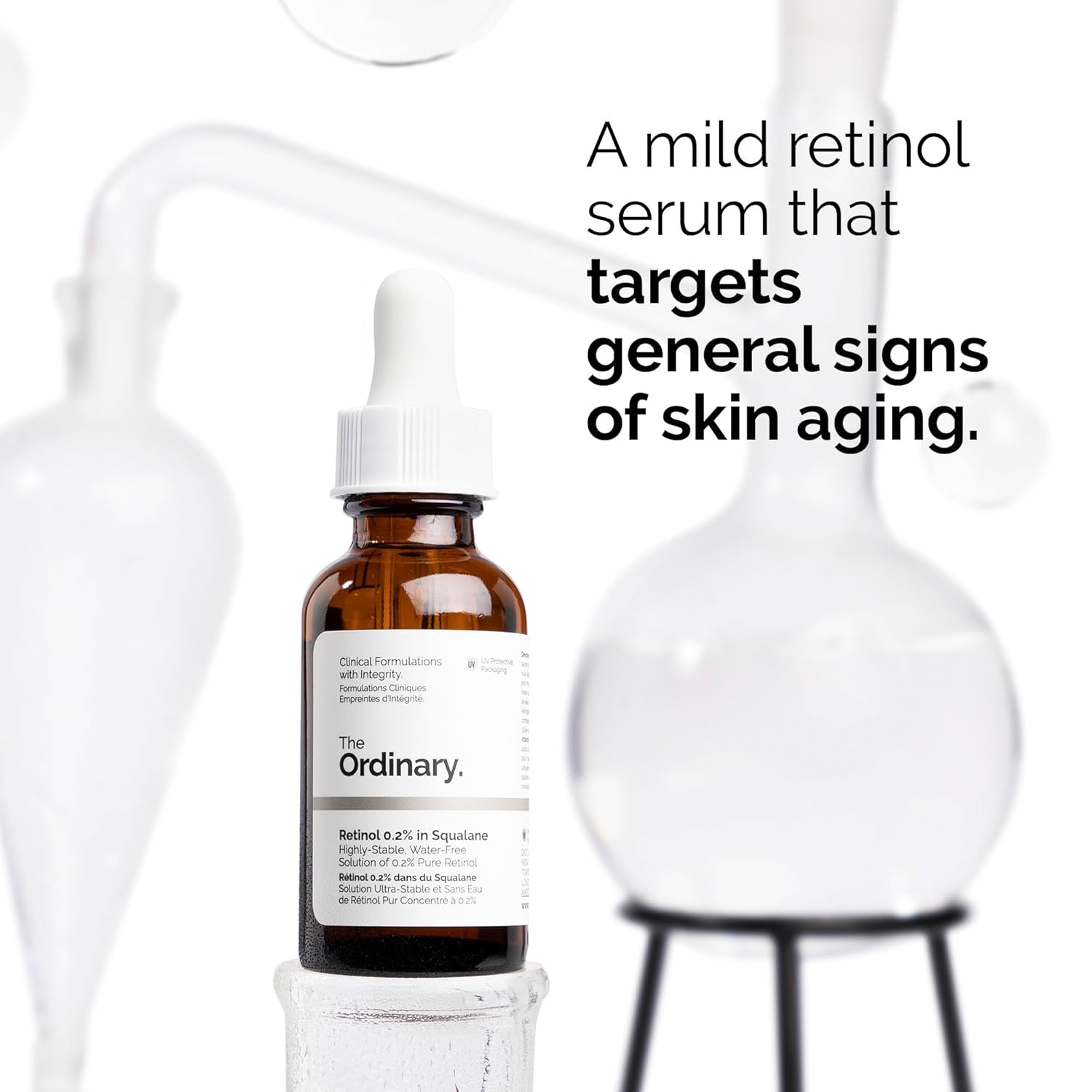
| EDITOR'S PICKPaula's Choice CLINICAL 1% Reti… | Mid-tier[CeraVe Anti Aging Retinol Serum…](https://www.amazon.com/dp/B07XJ7XWLW?tag=greenflower20-20) | Budget pick[The Ordinary Retinol 0.2% in Sq…](https://www.amazon.com/dp/B0CZ5VG3L1?tag=greenflower20-20) | |
|---|---|---|---|
| Retinol % | 1% | — | 0.2% |
| Pack Size | 1 oz | — | 1 oz |
| Fragrance Free | ✓ | — | — |
| Key Additives | Peptides, Vit C, Licorice | Hyaluronic, Niacinamide, Ceramides | Squalane |
| Price | $65.00 | $20.44 | $8.10 |
| See on Amazon → | See on Amazon → | See on Amazon → |
The Conversion Chain: Why “Stronger” Isn’t Always Faster
Here’s the core mechanic you need to internalize before shopping: retinoids don’t arrive in skin already active. Most of them are pro-hormones that your skin enzymes must convert into retinoic acid — the molecule that actually binds to receptors and triggers cellular turnover, tyrosinase suppression (meaning less melanin production), and collagen remodeling.
The conversion chain looks like this:
Retinyl esters → Retinol → Retinal → Retinoic acid (active)
Each arrow represents an enzymatic step. More steps mean more conversion loss, more time to effect, and generally less irritation. Fewer steps mean faster delivery to the receptor, stronger effect, and higher irritation potential — especially in the first 4–8 weeks.
By the numbers:
- Tretinoin (retinoic acid): 0 conversion steps — works directly at receptor
- Retinal: 1 conversion step — approximately 11× more potent than retinol in comparative delivery models per Cosmetics and Toiletries research on vitamin A derivative conversion efficiency
- Retinol: 2 conversion steps — the OTC standard; effective but slower
- Retinyl palmitate / other esters: 3+ steps — lowest irritation, lowest ceiling for pigmentation work
The American Academy of Dermatology’s guidance on retinoids explicitly notes that prescription-strength tretinoin has the strongest published evidence base for hyperpigmentation, but also the highest likelihood of retinoid dermatitis in early weeks — which is exactly why the ladder exists as a clinical tool, not just a marketing gradient.
Rung by Rung: What Each Form Actually Does for Pigmentation
Retinyl Esters — The Starter Rung
Retinyl palmitate and retinyl acetate show up in moisturizers, sunscreens, and basic OTC serums. They are the gentlest entry point and appropriate for someone who has never used vitamin A topically at all, has highly reactive or compromised barrier skin, or is cycling on from a chemical peel and needs a maintenance dose rather than an active treatment.
For pigmentation specifically, the evidence ceiling here is low. Paula’s Choice Expert Advice notes that retinyl esters require so many enzymatic conversions that meaningful brightening impact in clinical settings is modest compared to retinol and above. That doesn’t make them useless — barrier-sensitized skin that can’t tolerate retinol yet can still benefit from the mild cellular-renewal nudge. But if your goal is measurably fading post-inflammatory hyperpigmentation (PIH) or melasma within a realistic 3–6 month window, you will likely outgrow this rung quickly.
Decision rule: Use retinyl esters as a bridge — during barrier recovery, during a product introduction phase for highly reactive skin, or stacked in a moisturizer alongside a vitamin C serum doing the heavier brightening work.
Retinol — The OTC Workhorse
This is where most intermediate skincare users spend the bulk of their routine life — and for good reason. Retinol has the deepest published evidence base of any OTC vitamin A derivative for hyperpigmentation. The NCBI literature on topical retinoids in photodamage and hyperpigmentation management consistently positions 0.025%–1% retinol concentrations as capable of meaningful tyrosinase inhibition and accelerated melanin turnover when used consistently over 12+ weeks.
The practical tradeoff: retinol works, but it works on a timeline that requires patience. Healthline’s overview of retinol versus retinoid notes that most users don’t see meaningful pigmentation shift until weeks 10–16, with full results at the 6-month mark being a more honest expectation than the “visible in 4 weeks” language common in marketing copy.
Concentration matters more than most product pages admit:
- 0.025%–0.05%: Appropriate introduction dose; expect minimal purging or dryness; brightening effect is present but slow
- 0.1%–0.3%: Mid-range clinical sweet spot for PIH; balances tolerability with real turnover acceleration
- 0.5%–1%: Upper OTC range; approaches prescription-adjacent results in compliant, adapted skin; higher dryness and purge risk
The CeraVe Resurfacing Retinol Serum (~$20) sits in the low-to-mid range and is frequently referenced in dermatology-adjacent discussions as a well-tolerated entry point. At the mid-to-upper OTC tier, formulas with encapsulated retinol (time-release delivery) — like those found in the Paula’s Choice clinical retinol lineup — tend to generate fewer irritation complaints in aggregated reviews while maintaining efficacy, per Byrdie’s comparative coverage of retinol delivery systems.
Decision rule: If your pigmentation is mild-to-moderate (grade 1–2 PIH, superficial sun spots), well-formulated retinol at 0.3%–0.5% with a 3-month commitment is your most evidence-supported, cost-accessible rung. If you’ve cycled through 0.5%+ retinol for 6+ months without meaningful progress, you’ve likely hit the OTC ceiling — it’s time to look up the ladder.
Retinal (Retinaldehyde) — The Underused Middle Rung
Retinal is genuinely underappreciated in most consumer-facing skincare discussions, and it’s one of the clearest cases where understanding formulation science pays off in purchasing decisions. At one enzymatic step from active retinoic acid, retinal delivers meaningfully stronger cellular turnover than retinol while remaining available OTC — no prescription required.
Byrdie’s guide to retinaldehyde in skincare highlights two clinical advantages that matter specifically for pigmentation: first, retinal’s direct antimicrobial effect (useful for users whose PIH is driven by acne cycling), and second, faster visible impact on uneven tone compared to equivalent retinol concentrations in head-to-head user-reported comparisons.
The irritation profile is meaningfully higher than retinol but still well below prescription tretinoin for most skin types. The tolerance-building protocol is similar — low-frequency introduction (2–3 nights per week), buffer application over moisturizer when beginning, gradual escalation over 6–8 weeks.
Packaging is critical here: retinal is even more oxidation-sensitive than retinol, and the Cosmetics and Toiletries research on vitamin A stability consistently flags light and air exposure as major degradation vectors. Airless pump or opaque tube formats are essentially non-negotiable at this level. A retinal product in a dropper bottle or clear glass jar is a yellow flag worth scrutinizing.
At the mid-to-premium OTC tier, formulas like Geek & Gorgeous A-Game or the Medik8 Crystal Retinal line (0.01%–0.1% retinal concentrations) are consistently cited in Byrdie and Allure coverage as delivering measurable brightness improvement in user populations who had plateaued on retinol.
Decision rule: If you have adapted skin (6+ months of retinol without major sensitivity), moderate-to-stubborn PIH or melasma that hasn’t moved adequately on retinol alone, and you want prescription-adjacent results without a prescription, retinal is your next logical step. Budget for proper packaging — the delivery system matters as much as the concentration.
Prescription Tretinoin and Tazarotene — The Clinical Top Rung
Tretinoin (retinoic acid) is the gold standard by which every other rung is measured. It requires no enzymatic conversion and binds directly to retinoid receptors, making it the most studied and highest-ceiling topical retinoid available. The AAD’s retinoid guidance is unambiguous: for photodamage, melasma, and stubborn PIH, tretinoin at 0.025%–0.1% has the strongest clinical evidence of any topical vitamin A derivative.
The tradeoff is the retinoid reaction — the well-documented initial phase of redness, peeling, and photosensitivity that typically peaks at weeks 2–6 and resolves with skin adaptation. This isn’t a sign the product is wrong; it’s the cost of operating without the conversion buffer. Barrier preparation (ceramide-based moisturizers, layered application technique) and sun avoidance are non-negotiable alongside prescription retinoid use.
For the segment of this audience working with dermatologist-guided protocols or managing clinical-grade concerns like Fitzpatrick IV–VI melasma, tretinoin is often combined with azelaic acid or niacinamide for synergistic melanin suppression — a combination that NCBI literature on hyperpigmentation management describes as additive rather than merely cumulative.
Tazarotene, the other prescription player, is generally considered more potent than tretinoin milligram-for-milligram but carries correspondingly higher irritation risk; it’s less commonly used for pigmentation specifically and more common in psoriasis and severe photoaging protocols.
Decision rule: If you have persistent, treatment-resistant pigmentation, have adapted fully to high-dose OTC retinol or retinal, and are working with or willing to consult a dermatologist, tretinoin 0.025% is the evidence-based ceiling worth pursuing. Don’t attempt to skip directly to this rung from a retinyl ester base — the barrier damage from premature tretinoin introduction can worsen PIH, particularly in darker skin tones.
Building Your Ladder Decision Framework
The ladder isn’t a race. Escalating too fast creates barrier disruption that triggers new PIH — functionally undoing the work you’re trying to do. The cleaner mental model is this:
If your pigmentation is mild and your skin is retinoid-naive: Start at retinol 0.1%–0.3%. Give it 12 full weeks before evaluating. Combine with a stable vitamin C in the morning for synergistic tyrosinase suppression.
If you’ve plateaued on retinol 0.5%+ after 5–6 months: Move to retinal. Prioritize airless or opaque packaging. Expect an adaptation phase of 4–6 weeks before the irritation window closes and results become readable.
If you have clinical-grade pigmentation, melasma with deep dermal component, or have adapted fully to retinal: The prescription conversation with a dermatologist is the rational next step. The evidence gap between well-formulated retinal and tretinoin is real but narrower than it was a decade ago — it’s worth understanding what you’re trading off before assuming prescription is always the answer.
One honest note on timelines: across all retinoid forms, the realistic window for visible pigmentation fading is 3–6 months minimum, and 9–12 months for complete remodeling of deeper spots. Any product claiming measurable pigmentation correction in under 8 weeks with a retinoid as the primary active is working against the biology of the conversion chain. Match your expectations to the mechanism, not the marketing — and the ladder becomes a practical tool rather than an upsell.