Have you ever stood in a store aisle — or scrolled through a brand’s product page — staring at two niacinamide serums that look nearly identical, except one says “5%” and the other says “10%”? And wondered whether that difference in numbers justifies the difference in price, or whether you’ve been overthinking it? You’re not alone, and the confusion is understandable. Niacinamide (pronounced nye-a-SIN-a-mide) is a form of vitamin B3 that has become a cornerstone ingredient in brightening skincare. It works by interrupting the process that sends pigment — the stuff that causes dark spots — from pigment-producing cells (melanocytes) into the surface skin cells you actually see. The higher the percentage, the stronger the signal, broadly speaking. But “stronger” isn’t always “better,” and the relationship between concentration and real-world results is more nuanced than the label suggests. This article breaks down what the evidence actually says about each concentration tier, names the tradeoffs plainly, and gives you a clear decision rule at the end.
| EDITOR'S PICKPaula's Choice CLINICAL 20% Nia… | Mid-tier[Naturium Niacinamide Face Serum…](https://www.amazon.com/dp/B07WSS5M4Z?tag=greenflower20-20) | Budget pick[The Ordinary Niacinamide 10% +…](https://www.amazon.com/dp/B0DP1GMQK4?tag=greenflower20-20) | |
|---|---|---|---|
| Niacinamide % | 20% | 12% | 10% |
| Zinc % | — | 2% | 1% |
| Size | 0.67 oz | 1 oz | 1 oz |
| Fragrance-free | ✓ | — | — |
| Vegan | — | ✓ | — |
| Cruelty-free | — | ✓ | — |
| Price | $55.00 | $13.59 | $6.00 |
| See on Amazon → | See on Amazon → | See on Amazon → |
Why Concentration Isn’t the Only Number That Matters
Before you evaluate 5% versus 20%, it helps to understand what niacinamide is actually competing against inside the formula. A niacinamide serum isn’t just niacinamide dissolved in water. It sits inside a vehicle — a mix of solvents, humectants, and stabilizers — and that vehicle changes how much active ingredient your skin actually absorbs and how well it tolerates the dose.
The landmark study most formulators cite is the 2002 paper by Zoe Diana Draelos et al., published in the British Journal of Dermatology, titled “The Effect of Niacinamide on Reducing Cutaneous Pigmentation and Suppression of Melanosome Transfer.” That research demonstrated measurable reduction in hyperpigmentation — dark spots caused by sun damage, post-acne marks, or hormonal changes like melasma — at a 5% concentration applied twice daily over 8 weeks. A 2011 paper published in the International Journal of Dermatology, examining topical niacinamide for melasma and post-inflammatory hyperpigmentation, confirmed that 5% niacinamide showed statistically significant improvement in both conditions.
Here’s the critical framing point: 5% is the evidence-established floor for pigmentation work. Everything below that — the 2% and 3% concentrations that show up in moisturizers and toners — is in barrier-support and sebum-regulation territory, not meaningful brightening territory. The jump from 5% to 10% and above is where the tradeoff conversation actually begins.
The Three Concentration Tiers, Mapped Honestly
5% Niacinamide: The Evidence-Backed Baseline
Who it’s for: First-time users, sensitive skin, and anyone layering niacinamide on top of other active ingredients — vitamin C, retinol, AHAs — and managing interaction risk.
What it does: At 5%, niacinamide reliably inhibits melanosome transfer — the mechanism by which pigment granules move from pigment cells into the outer skin layer — as established in the Draelos et al. British Journal of Dermatology study. Healthline, in their overview article “Niacinamide: What It Is and How to Use It for Skin Care,” notes that 5% is the concentration most consistently cited in published research for visible brightening outcomes, and describes the mechanism as gentle enough to suit even reactive skin types. Expect a realistic, gradual fading of post-acne marks and mild sun spots over 8–12 weeks of consistent use — a realistic 15–25% visible improvement in spot intensity at the 8-week mark, not transformation.
Stability and formulation note: 5% is easier to formulate well. At this concentration, the risk of niacinamide converting to niacin (which causes flushing and skin redness) in unstable formulas is lower, especially in well-buffered, airless-pump packaging. Budget-accessible entry points at this tier include widely reviewed drugstore serums that Byrdie covers in their feature “Everything You Need to Know About Niacinamide” as practical starting points for first-time users.
Trade-off: The ceiling is real. For moderate to deep pigmentation — longstanding sun spots, mature melasma — 5% alone, without a supporting ingredient like alpha-arbutin or a retinoid, tends to plateau. You’ll see progress; you may not see resolution.
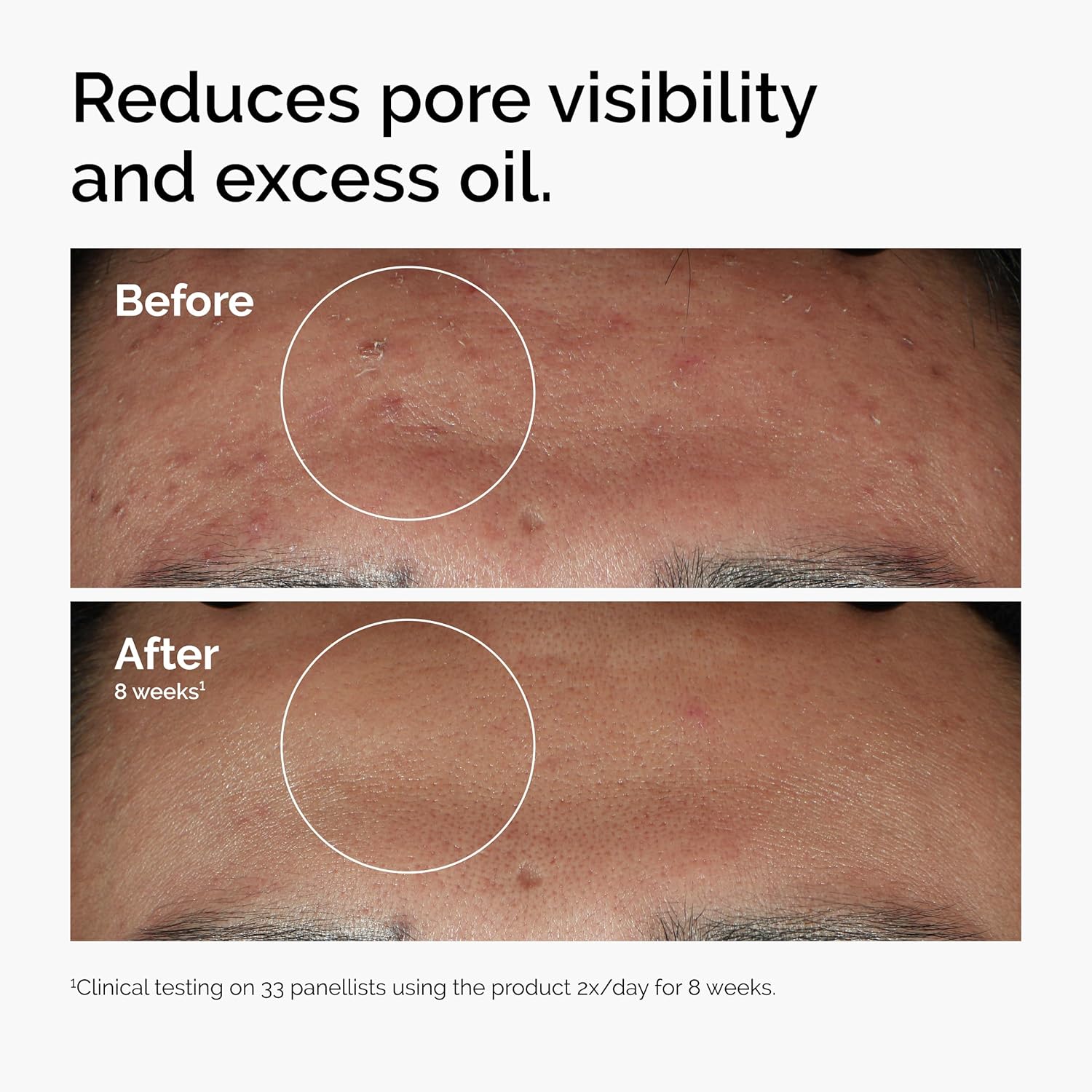
The
$6.00
In stock on Amazon
Check price on Amazon10% Niacinamide: The Sweet Spot Most Formulators Land On
Who it’s for: Intermediate users with established skin tolerance, mild-to-moderate pigmentation concerns, and routines that aren’t already stacked with multiple sensitizing actives.
What it does: This is where the majority of well-formulated mid-tier brightening serums cluster — and for good reason. Paula’s Choice Expert Advice, in their guidance piece “Niacinamide: What It Is and How to Use It,” notes that 10% represents an effective brightening dose that most skin types tolerate without meaningful irritation, particularly when the formula includes hydrating buffers like glycerin or hyaluronic acid. The incremental benefit over 5% isn’t double — biology doesn’t scale linearly — but 10% is the concentration at which sebum regulation, barrier strengthening, and pigmentation suppression effects are all meaningfully active simultaneously, according to formulation commentary published in Cosmetics & Toiletries.
Real-world pattern: Allure, in their feature “The Best Niacinamide Serums, According to Dermatologists,” notes that dermatologists most frequently recommend the 10% tier for patients with post-inflammatory hyperpigmentation — specifically citing the combination of efficacy and tolerability as the reason this range dominates clinical recommendations. Users at 10% tend to report faster visible progress compared to 5% products, particularly on post-acne marks, when consistent application is maintained over 10–12 weeks. The reduction in time-to-visible-result, rather than a dramatic difference in final outcome, is the practical differentiation between these two tiers.
Formulation matters more here: At 10%, the quality of the surrounding formula becomes a bigger variable. A thin, poorly buffered 10% serum can provoke a niacin flush response in people with reactive skin. Airless pump packaging that limits oxidation and contamination is worth prioritizing at this tier, both for stability and for the higher price point it typically commands.
The vitamin C layering question: 10% is the concentration where layering with vitamin C requires more thought. Older research suggested niacinamide and ascorbic acid interact to form a flushing compound; more recent formulation science, as summarized in Paula’s Choice Expert Advice’s niacinamide guidance, indicates this interaction is minimal at room temperature in stable formulas. Still, if your routine includes a dedicated vitamin C serum, applying them at different times of day rather than back-to-back is a practical precaution.
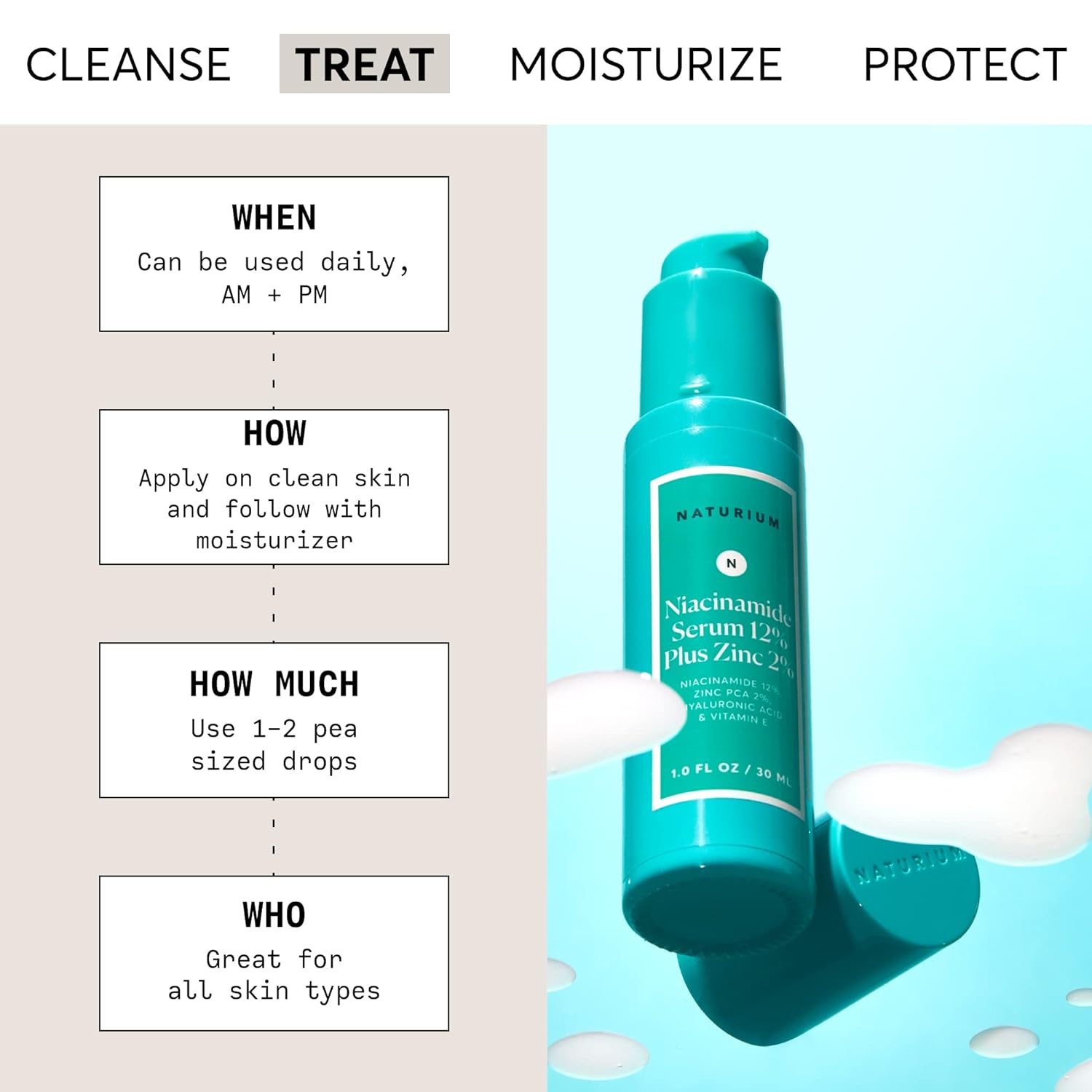
Naturium
$13.59
In stock on Amazon
Check price on Amazon20% Niacinamide: High-Dose, Specific Use-Case
Who it’s for: Experienced users with confirmed skin tolerance, or those under practitioner guidance targeting resistant pigmentation, large-pore appearance, and oil control simultaneously. Not a first-line recommendation.
What it does: At 20%, you’re past the evidence base for pigmentation specifically and into a tier where the benefit-to-irritation ratio narrows considerably. There is no large-scale clinical trial establishing that 20% niacinamide outperforms 10% for dark spot fading — the mechanism of action (melanosome transfer inhibition) appears to plateau at high concentrations, according to formulation commentary in Cosmetics & Toiletries. What 20% does do more aggressively is regulate sebum, support barrier lipid production, and create a temporary mattifying effect that some oily or acne-prone skin types find beneficial.
The honest math on irritation:
By the numbers
- 5%: Flushing and irritation reported in fewer than 5% of users in clinical settings, per the Draelos et al. British Journal of Dermatology research
- 10%: Irritation incidence rises modestly; well-buffered formulas with hydrating co-ingredients keep it low for most users
- 20%: Redness and tingling reported more frequently; not well-characterized by large pigmentation-specific trials
Byrdie’s niacinamide overview notes that warming or flushing sensations on application are a commonly reported user experience with very high-concentration formulas — this is the niacin flush response, and while it is not dangerous, it is a daily-compliance variable worth factoring into your product decision. A product that causes a distracting sensation every morning is one you’re more likely to skip.
Trade-off: More is not more for pigmentation. If your primary goal is dark spot reduction, there is no published evidence that 20% delivers meaningfully faster or deeper fading than a well-formulated 10% product. The premium price commanded by 20% concentration is primarily justified if you have concurrent oil-control or large-pore goals — not if pigmentation is the sole target.
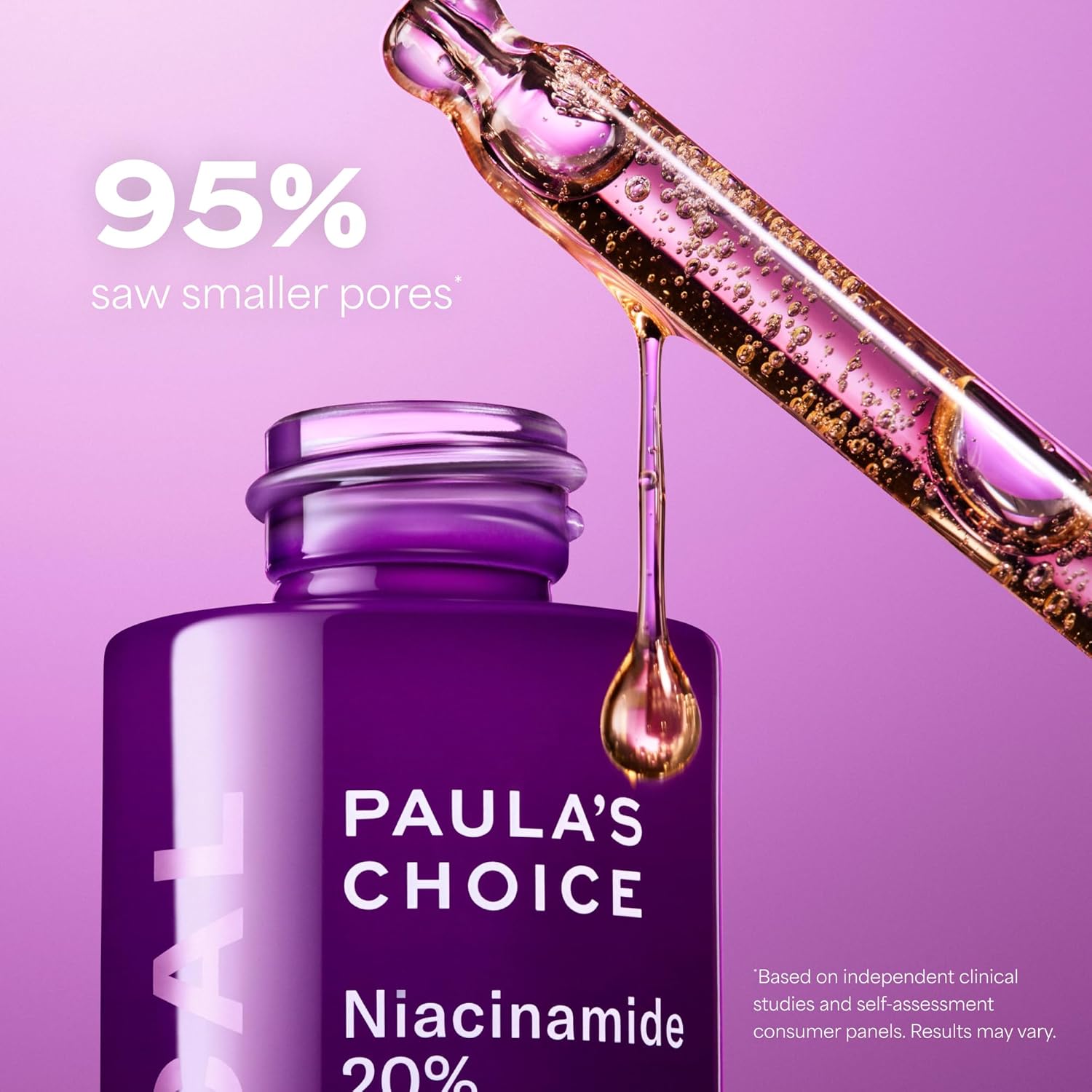
Paula's
$55.00
In stock on Amazon
Check price on AmazonDecision Frame: If X, Then Y
This is where the concentration debate cashes out into an actual product decision.
If you’re new to actives or have sensitive, reactive, or rosacea-prone skin: Start at 5% in a buffered, glycerin-forward formula. Give it 10–12 weeks of twice-daily use before evaluating. The evidence is solid; the tolerance risk is low. The American Academy of Dermatology, in their patient guidance on hyperpigmentation, recommends starting with lower-concentration brightening actives and building gradually — niacinamide at 5% fits this principle precisely.
If you have mild-to-moderate post-acne marks or sun spots and a stable existing routine: 10% is almost certainly your optimal dose. Look for airless pump packaging, a pH between 5.5 and 7 (niacinamide is pH-flexible but performs well in this range), and a formula with at least one complementary brightener — alpha-arbutin, tranexamic acid, or a stabilized vitamin C derivative — to compound the effect. Paula’s Choice Expert Advice specifically calls out 10% as the tier where the ingredient’s multiple mechanisms of action work together most efficiently, making it the strongest all-around choice for most users.
If you have oily or acne-prone skin and want sebum control alongside brightening: 10% paired with zinc handles both goals. You do not need 20% to achieve meaningful oil regulation; the zinc co-factor does substantial work at the 10% tier, as noted in Byrdie’s niacinamide coverage of combination formulas.
If you’re under dermatologist supervision targeting melasma specifically: Niacinamide at any concentration is a supporting ingredient, not a monotherapy. The American Academy of Dermatology’s hyperpigmentation guidance notes that melasma treatment typically involves a combination approach — a topical brightener, a retinoid, and often a tyrosinase inhibitor such as hydroquinone or kojic acid working in sequence. In this clinical context, 10% niacinamide as the brightening layer within a multi-step prescribed system is the more evidence-aligned choice than chasing a 20% standalone product.
If you have confirmed skin tolerance and concurrent large-pore or oiliness goals: 20% is a defensible choice, used once daily to manage the irritation ceiling. Go in with realistic expectations: your dark spot results will not outpace a well-formulated 10% product. The justification for this tier is the combination of goals, not superior pigmentation efficacy alone.
The Timeline Reality Check
One final honest note before you add anything to cart: niacinamide is not a fast ingredient. Published research showing statistically significant pigmentation improvement — across both the Draelos et al. British Journal of Dermatology work and the 2011 International Journal of Dermatology melasma study — consistently runs to 8–12 weeks minimum, with continued improvement through 16 weeks of twice-daily application.
If a product’s marketing suggests visible brightening in 2 weeks, that language is describing the immediate luminosity effect of hydration and skin-texture smoothing — not melanin reduction. Those are two different outcomes, and keeping them separate in your evaluation will save you from a lot of disappointed returns.
Healthline’s overview of niacinamide notes that its gentle, non-exfoliating mechanism makes it one of the more sustainable actives to maintain long-term — which matters for pigmentation work, because consistent daily application across months is what separates visible results from plateau. The best concentration is ultimately the one you will actually use every day without irritation cutting your streak short.
For most people reading this, that concentration is 10%, in a stable formula, in airless pump packaging, applied with patience.