You’ve cycled through the $7–$20 tier. You’ve been through The Ordinary’s vitamin C suspension, you’ve run a CeraVe retinol serum, and honestly — they worked, up to a point. Now you’re looking at the $40–$85 shelf and wondering whether that jump in price actually buys you anything measurable, or whether you’re mostly paying for a nicer box and a brand with a better Instagram presence. That’s a fair question, and it’s exactly what this guide is built to answer.
Brightening serums in this range are targeting one main thing: hyperpigmentation — the dark spots, uneven skin tone, and post-breakout marks that form when your skin overproduces melanin (the pigment that gives skin its color). The actives that interrupt that process — vitamin C, niacinamide, alpha arbutin, tranexamic acid — aren’t exclusive to expensive formulas. But concentration, stability, and delivery system genuinely matter, and that’s where the mid-tier gets interesting. Here’s the honest breakdown of what’s worth your money and what isn’t.
| EDITOR'S PICK[Murad Rapid Dark Spot Correctin…](https://www.amazon.com/dp/B08KR79NBR?tag=greenflower20-20) | Mid-tierPaula's Choice CLINICAL 20% Nia… | Budget pickPaula's Choice BOOST 10% Niacin… | |
|---|---|---|---|
| Key active(s) | Resorcinol, Tranexamic, Glycolic | 20% Niacinamide | 10% Niacinamide, Vit C, Licorice |
| Target concern | Dark spots, aging | Discoloration, large pores | Pores, all skin types |
| Volume | — | 0.67 oz | 0.67 oz |
| Fragrance-free | — | ✓ | ✓ |
| Formulation type | Serum | Concentrated serum | Serum booster |
| Price | $84.00 | $55.00 | $49.00 |
| See on Amazon → | See on Amazon → | See on Amazon → |
What You’re Actually Paying For in the $40–$85 Range
Before naming names, it helps to know what separates a well-priced $55 serum from an overpriced one. There are three real value drivers here: active concentration, formulation stability, and packaging integrity.
Active concentration is the most obvious. A vitamin C (L-ascorbic acid — the gold-standard, most-researched form) serum at 15% does meaningfully more than one at 5%. Paula’s Choice Expert Advice notes that L-ascorbic acid concentrations between 10–20% represent the effective window for photoprotection and brightening, with diminishing returns and increased irritation above 20%. Mid-tier pricing often unlocks that 10–20% range in a stable base — something harder to engineer at a $10 price point.
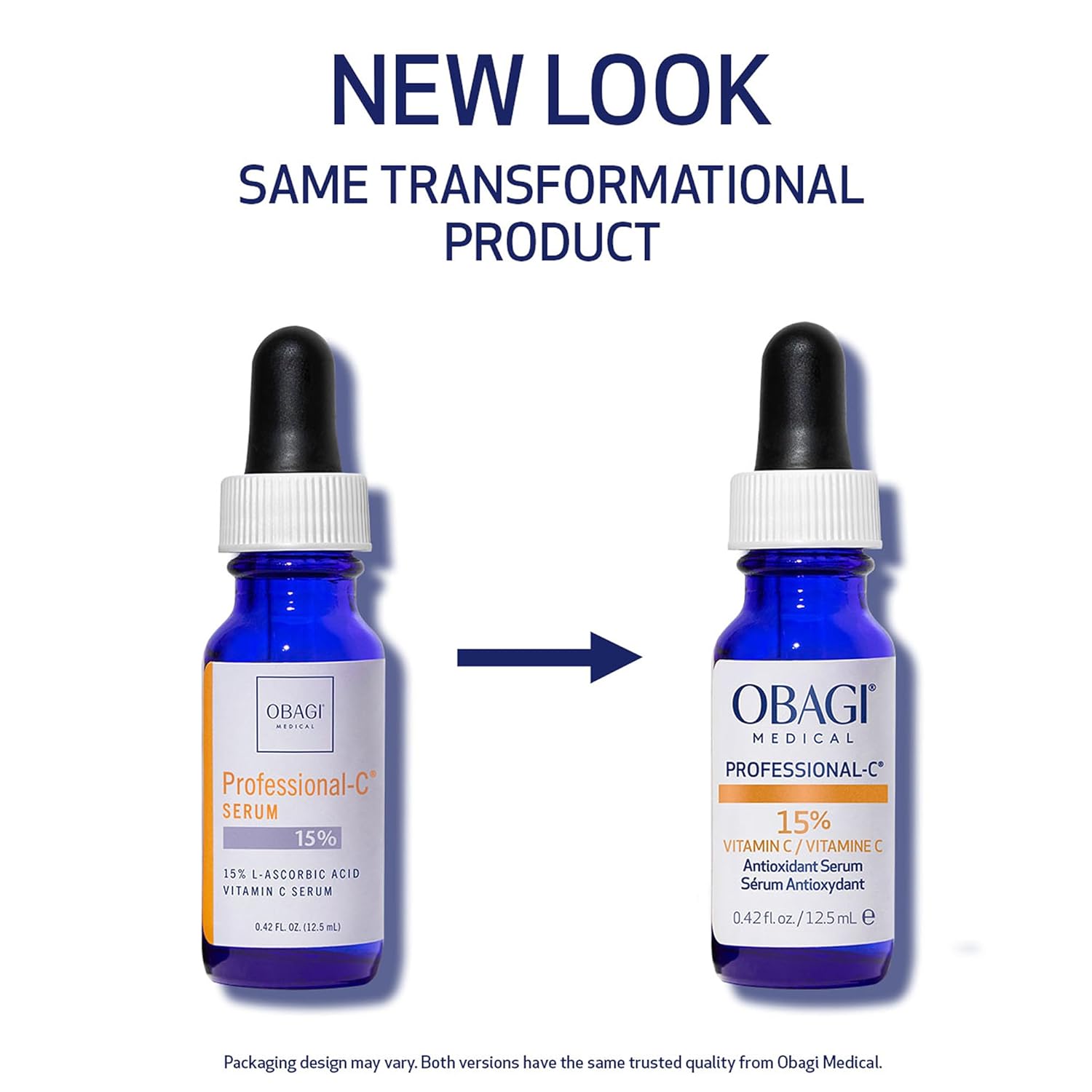
Formulation stability is where most shoppers underestimate the gap. Vitamin C oxidizes (breaks down when exposed to air and light) quickly in water-based formulas. A serum that’s brilliant on launch can be inert within a few months if the pH isn’t tightly controlled or the packaging lets in air. Cosmetics and Toiletries’ research on ascorbic acid stability in topical formulations consistently identifies pH below 3.5 and airtight packaging as the critical variables. Mid-tier brands with airless pump packaging — like Paula’s Choice — are specifically engineering around this problem. A dropper bottle at the same price isn’t.
Packaging integrity closes the loop. An airless pump limits oxidation exposure per dose. A dark glass bottle helps. A clear dropper bottle in a bright display? That’s a red flag at any price.
By the Numbers
| Price tier | Typical L-ascorbic acid % | Common packaging | Typical pH range |
|---|---|---|---|
| Entry ($7–$20) | 5–10% | Dropper, open bottle | 3.5–5.5 |
| Mid-tier ($40–$85) | 10–20% | Airless pump or dark glass | 2.5–3.5 |
| Premium ($100+) | 15–20% + synergists | Airless pump, UV-blocking | 2.5–3.5 |
The mid-tier earns its place when it hits that bottom row’s formulation standards at half the premium price.
The Ones Worth It — and Why
Paula’s Choice C15 Super Booster (~$49)
This is the clearest value case in the tier. Fifteen percent L-ascorbic acid, vitamin E, and ferulic acid — the same synergistic trio that defines SkinCeuticals C E Ferulic at $182 — in an airless pump at pH ~2.8. Paula’s Choice Expert Advice is transparent about the formulation rationale: vitamin E and ferulic acid stabilize L-ascorbic acid and amplify its antioxidant effect, a combination documented in peer-reviewed literature. Byrdie’s editorial coverage of vitamin C serums consistently places this formula in the top tier for the $40–$60 bracket specifically because the packaging and pH are actually correct, not just claimed.
The honest tradeoff: it’s a booster, not a standalone serum — it’s thin and designed to be mixed or layered. If you want a single-step brightening serum, the format is slightly inconvenient.
Tatcha Violet-C Brightening Serum (~$88, technically top of tier)
At the high end of this bracket, Tatcha earns its price through ingredient layering rather than raw vitamin C concentration. It combines 20% vitamin C with 10% AHA (alpha hydroxy acids — exfoliants that help resurface the skin’s outer layer and accelerate pigmentation turnover), plus Japanese beautyberry extract as an antioxidant amplifier. Allure’s vitamin C serum coverage flags this as one of the more complete brightening architectures under $100, because the AHA component accelerates cell turnover simultaneously — meaning you’re addressing new pigment production (vitamin C) and existing surface discoloration (AHA) in one step.
Tradeoff: the AHA content means this is not suitable for daytime use without diligent SPF, and it’s not appropriate for sensitized or compromised skin barriers. It’s a results-focused formula, not a gentle-entry one.
Good Molecules Discoloration Correcting Serum (~$12, but earns an honorable mention)
Technically under the tier floor, but worth noting as the benchmark against which mid-tier formulas should be measured. It combines tranexamic acid (a melanin-synthesis inhibitor with a strong clinical evidence base per the American Academy of Dermatology’s hyperpigmentation treatment overview), niacinamide, alpha arbutin, and kojic acid in one formula. At $12, it demonstrates that multi-active brightening is achievable at low cost — which is relevant context when you’re deciding whether $55 buys you anything incremental. If your primary concern is pigmentation correction rather than antioxidant photoprotection, this outperforms its price dramatically.
The INKEY List Tranexamic Acid Serum (~$15–$18)
Same category as above — below the $40 floor but included because it’s frequently compared against mid-tier options. Healthline’s overview of niacinamide and skin brightening supports the mechanism here: tranexamic acid at 2% with niacinamide at 2% provides a complementary dual mechanism (melanin synthesis inhibition + skin barrier support). The tradeoff versus mid-tier is the absence of the vitamin C antioxidant photoprotection benefit — this corrects existing pigmentation but doesn’t build oxidative defense.
The Ones That Don’t Earn It
This is where the analysis gets more useful than any best-of list.
Serums with high vitamin C claims but dropper packaging in clear bottles. This is the most common overpay in the $40–$85 range. Several mid-tier brands — and a handful of prestige-adjacent ones — are shipping 15% or 20% L-ascorbic acid in conditions that virtually guarantee significant oxidation before you finish the bottle. Cosmetics and Toiletries’ stability research is unambiguous: L-ascorbic acid in an aqueous solution degrades rapidly above pH 3.5 and with repeated air exposure. If the packaging isn’t airless and the formula isn’t pH-verified (most brands don’t publish this — a yellow-orange serum color is often the tell that oxidation is already happening), you are buying instability at a premium markup.
Vitamin C derivatives presented as equivalent to L-ascorbic acid. Ascorbyl glucoside, ascorbyl palmitate, magnesium ascorbyl phosphate — these are stabilized vitamin C derivatives that convert to L-ascorbic acid on the skin, in theory. In practice, the conversion rate is incomplete and variable. Paula’s Choice Expert Advice is direct on this: derivatives are gentler but less proven for the photoprotection and brightening mechanisms that make L-ascorbic acid valuable. A $65 serum built around ascorbyl glucoside is not doing the same job as a $49 serum with 15% L-ascorbic acid in a stable delivery system. If the active is a derivative, the pricing should reflect derivative-tier efficacy.
Niacinamide serums priced above $35 without additional actives. Niacinamide (vitamin B3) is an excellent skin-barrier and pigmentation ingredient — Healthline’s research overview and the AAD’s hyperpigmentation guidance both support its use for uneven tone. But it’s also cheap to formulate. Niacinamide at 10% in a clean base costs pennies per bottle to produce. Serums in the $45–$65 range built primarily around niacinamide with minimal complementary actives are pricing on marketing, not formulation complexity. The exception: niacinamide serums that pair it meaningfully with tranexamic acid, alpha arbutin, or retinol — those combinations earn the premium by compounding mechanisms.
How to Evaluate Any Mid-Tier Serum Before You Buy
Here’s a practical decision frame based on what the research actually supports:
Check the active and its form first. L-ascorbic acid at 10–20% in an airless pump with pH under 3.5 is the gold standard. Derivatives are acceptable but not equivalent — price accordingly.
Check the packaging before the marketing claims. Clear dropper bottle with L-ascorbic acid? Hard pass regardless of percentage claims. Airless pump or opaque dark glass? Minimum viable for consideration.
Look for synergists, not just the hero active. Vitamin C paired with vitamin E and ferulic acid, or vitamin C paired with AHA, or tranexamic acid paired with niacinamide — the multi-mechanism formulas are where mid-tier pricing becomes genuinely defensible. A single-active formula at $60 needs a compelling reason to exist.
Match the mechanism to your concern. If you’re addressing post-inflammatory hyperpigmentation (dark marks left by acne or irritation), tranexamic acid and niacinamide combinations are as evidence-backed as vitamin C for that specific application. If you’re addressing photoaging, sun spots, and want antioxidant photoprotection alongside brightening, L-ascorbic acid is the non-negotiable.
Realistic timeline check. The American Academy of Dermatology’s clinical guidance on hyperpigmentation is consistent: meaningful improvement in pigmentation takes a minimum of 8–12 weeks of consistent use, with full results at 4–6 months. Any serum in this tier — or any tier — promising visible results in 2–4 weeks is overselling the biology. Budget your patience the same way you budget your purchase.
The decision rule: If you’re building antioxidant photoprotection into your routine alongside brightening, Paula’s Choice C15 in the airless pump is the clearest value in the tier. If you want an AHA-accelerated full-correction protocol and can manage the sun sensitivity tradeoff, Tatcha Violet-C is defensible at the top of the range. If your primary goal is pigmentation correction without the vitamin C component, the Good Molecules or INKEY List tranexamic acid formulas genuinely outperform most of this tier at a fraction of the cost — and the $40 you save goes toward SPF, which is doing more work for your dark spots than any serum on the market.