If you’ve been in the brightening space long enough, you’ve noticed a pattern: Korean beauty brands are excellent at making skin look lit from within — that glass-skin, dewy radiance effect that photographs beautifully. But there’s a meaningful difference between a serum that delivers surface luminosity (think hydration, light diffusion, slip) and one that is actively interrupting the biological process that creates dark spots (called hyperpigmentation — uneven concentrations of melanin, the pigment that gives skin its color). The first category makes you glow today. The second category, used consistently over months, actually fades the spots. If you’re working with clients who are frustrated that their K-beauty haul improved their texture but left their melasma (hormonally-triggered dark patches) or post-acne marks untouched, this guide is the calibration tool you need.
What follows is a formulation-first breakdown of Korean brightening serums that are built around clinically recognized depigmenting actives — not just pearlescent finishes and fermented extracts. We’ll name the tradeoffs, show the relevant numbers, and give you a clear decision framework at the end.
| EDITOR'S PICK[Beauty of Joseon Glow Serum Pro…](https://www.amazon.com/dp/B0DZGKNPRB?tag=greenflower20-20) | Mid-tier[K-SECRET SEOUL 1988 Retinal Ser…](https://www.amazon.com/dp/B0CP3C7TTJ?tag=greenflower20-20) | Budget pick[SKIN1004 Tone Balancing Capsule…](https://www.amazon.com/dp/B09TLFY4GP?tag=greenflower20-20) | |
|---|---|---|---|
| Active ingredients | Propolis, Niacinamide | Retinal 2%, Niacinamide, Bakuchiol, Black Ginseng | Niacinamide, Centella, Tranexamic Acid |
| Volume | 60 ml / 2 fl oz | 30 ml / 1.01 fl oz | 3.38 fl oz |
| Target concern | Uneven skin tone, irritation | Fine lines, skin texture | Uneven skin tone |
| Price | $22.70 | $17.50 | $13.00 |
| See on Amazon → | See on Amazon → | See on Amazon → |
The Glow vs. Depigmentation Split: Why It Matters Before You Recommend Anything
The K-beauty brightening category is large and deliberately blurry. Brands use “brightening,” “radiance,” and “luminous” almost interchangeably in English-language marketing, which obscures what’s actually happening at the ingredient level.
Here’s the functional split:
Surface-glow mechanisms (make skin look brighter, don’t address pigmentation at the source):
- Hydration plumping (hyaluronic acid, ceramides, panthenol)
- Light-diffusing particles (silica, mica)
- Antioxidant environmental defense (fermented ingredients, green tea extract)
- Exfoliation for surface cell turnover (low-pH treatments, PHAs)
Melanin-interruption mechanisms (targeting the pigmentation process itself):
- Tyrosinase inhibition — blocking the enzyme that triggers melanin synthesis (arbutin, kojic acid, niacinamide at effective concentrations, vitamin C as L-ascorbic acid)
- Melanosome transfer disruption — stopping melanin from moving into surface skin cells (niacinamide, tranexamic acid)
- Post-inflammatory pathway suppression — reducing the cascade that triggers pigmentation after inflammation (tranexamic acid, azelaic acid)
Per the American Academy of Dermatology’s melasma treatment overview, the gold standard actives for true hyperpigmentation management remain hydroquinone (restricted in most K-beauty due to regulatory environment), azelaic acid, kojic acid, and vitamin C — with tranexamic acid gaining significant clinical backing for melasma specifically in recent years.
The practical implication: a serum can be legitimately Korean, legitimately brightening, and still not touch your client’s dark spots in any meaningful way. Ingredient list literacy is the filter.
The Active Ingredients to Look For — and the Concentrations That Actually Work
Niacinamide (Vitamin B3)
The workhorse of K-beauty formulations. Niacinamide inhibits melanosome transfer — the handoff of melanin packets to surface keratinocytes — and has a strong tolerability profile that makes it stackable for most skin types. Per Healthline’s overview of niacinamide for skin, research supports concentrations of 4–5% for visible brightening effect, with most efficacy data clustering around the 5% mark.
The problem: many K-beauty serums list niacinamide as an ingredient without specifying concentration. When it’s positioned behind a long ferment complex and before phenoxyethanol in the INCI order, it’s likely decorative. Look for it in the first five to eight ingredients, or look for a brand that publishes the percentage.
COSRX The Niacinamide 15 Serum publishes its concentration explicitly — 15% is above the standard threshold, making it one of the more transparent depigmentation-focused entries in the accessible K-beauty tier. Reviewers across Byrdie’s K-beauty roundups consistently flag it as a functional performer for post-acne marks specifically.
Tranexamic Acid
The most interesting active in Korean dermocosmetic formulations right now. Tranexamic acid (TXA) was originally a hemostatic pharmaceutical — used to reduce bleeding — and its mechanism in pigmentation is distinct from classic tyrosinase inhibitors. It interferes with the UV-triggered keratinocyte-melanocyte communication pathway, which is why it has particular utility in melasma and UV-induced hyperpigmentation. Paula’s Choice expert advice on tranexamic acid notes that topical TXA at 2–5% shows meaningful results in published trials, with one well-cited Korean study showing significant melasma improvement at 3% over 12 weeks.
SOME BY MI Snail Truecica Miracle Repair Serum and By Wishtrend Vitamin C 21.5 Advanced Serum both leverage tranexamic acid, though in combination matrices that make isolating its contribution difficult. For practitioners, the cleaner single-active-forward formulas are easier to attribute outcomes to when troubleshooting.
Isntree Hyaluronic Acid Toner and newer iterations from Round Lab have incorporated TXA at disclosed percentages — worth tracking as this cohort expands.
Alpha-Arbutin
Arbutin is a glycosylated derivative of hydroquinone — same mechanism (tyrosinase inhibition), lower irritation risk, no regulatory restrictions in the Korean market. Per The Beauty Brains’ breakdown of how arbutin works to fade dark spots, alpha-arbutin is 10x more potent than beta-arbutin in tyrosinase inhibition per unit weight, so the isomer designation on the label matters.
The Ordinary’s Alpha Arbutin 2% + HA is the accessible benchmark many clients have already tried. Korean counterparts worth considering in the mid-tier:
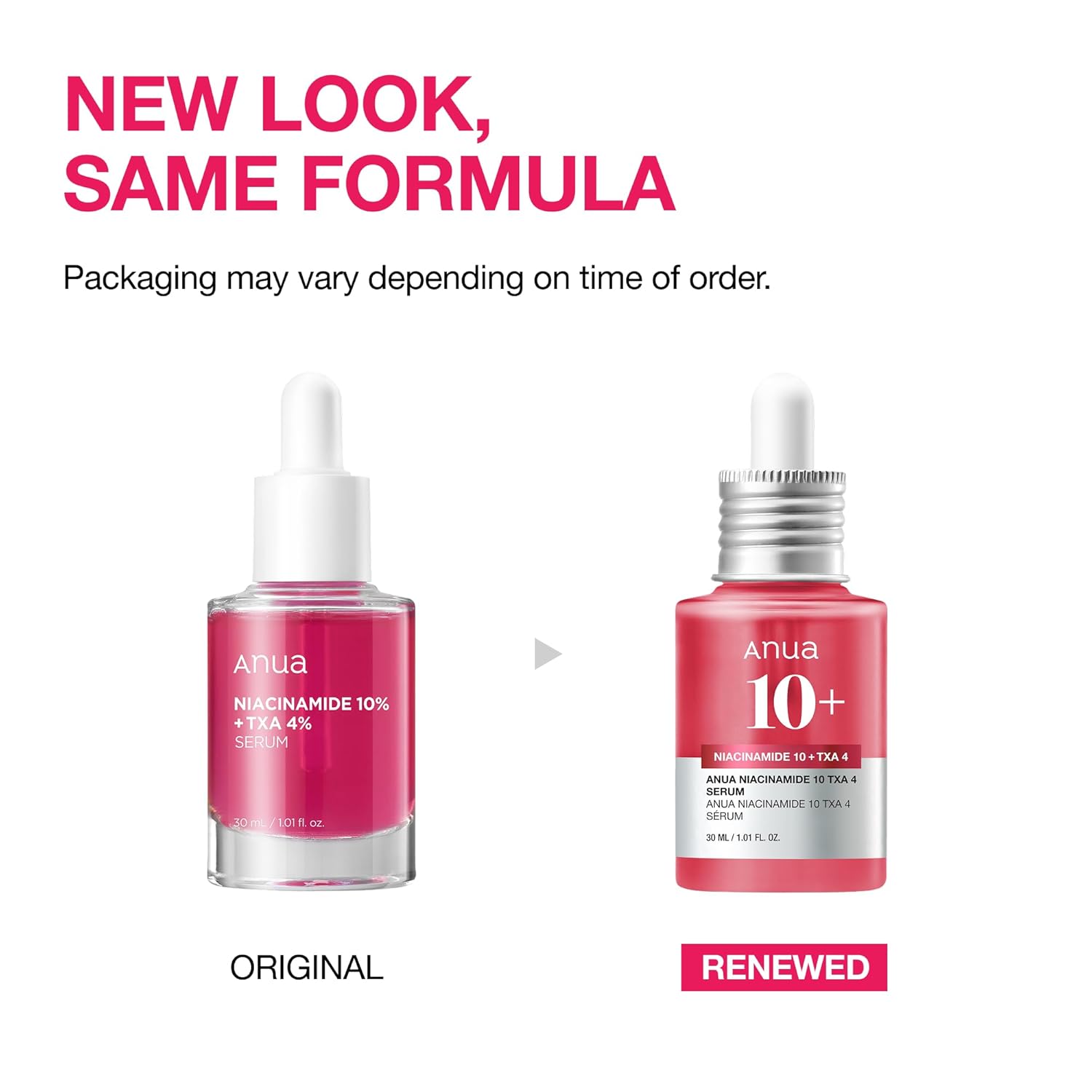
- Anua Niacinamide 10% + TXA 4% Serum — one of the cleaner combination formulas at a transparent percentage disclosure. Combines two complementary mechanisms (transfer inhibition + UV pathway disruption) in one step.
- Numbuzin No.3 Skin Softening Serum — leans niacinamide-heavy with supporting brighteners; consumer feedback across aggregated reviews points to a strong post-inflammatory mark profile.
Vitamin C (L-Ascorbic Acid) — The Stability Problem
Vitamin C as L-ascorbic acid (LAA) is the most efficacious topical antioxidant for pigmentation, full stop. It inhibits tyrosinase, neutralizes free radicals that trigger post-inflammatory pigmentation, and has the deepest evidence base of any brightening active. Per Cosmetics and Toiletries’ analysis of stability challenges in ascorbic acid formulations, LAA is water-soluble, highly unstable, and oxidizes rapidly when exposed to air, light, or alkaline pH — which is why packaging is not a cosmetic preference but a formulation requirement.
K-beauty brands have approached this problem in two ways:
- Stabilized derivatives — Ascorbyl glucoside, sodium ascorbyl phosphate, ascorbyl tetraisopalmitate. More stable, but less potent and slower to convert to active LAA in skin.
- Optimized anhydrous or low-pH formats — Some brands are now delivering LAA in airless pump packaging at pH 3.0–3.5 with ferulic acid as a stability co-factor, mirroring the SkinCeuticals CE Ferulic logic but at lower price points.
By Wishtrend Vitamin C 21.5 Advanced Serum uses a stabilized format in controlled packaging — reviewers at Byrdie flag its brightening payoff as genuine over extended use, though the 21.5% figure refers to a vitamin C complex, not pure LAA, which matters for efficacy expectations.
For clients who can tolerate pure LAA, the clinical-tier recommendation remains the same as always: SkinCeuticals C E Ferulic at pH-optimized LAA 15% with vitamin E and ferulic acid. K-beauty doesn’t have a direct apples-to-apples match at that formulation standard as of mid-2026.
By the Numbers: Active Concentration Reference
| Active | Minimum Effective Concentration (Research-Supported) | Common K-Beauty Range |
|---|---|---|
| Niacinamide | 4–5% | 2–15% (varies widely) |
| Tranexamic Acid | 2–5% | 1–5% |
| Alpha-Arbutin | 1–2% | 0.5–2% |
| L-Ascorbic Acid (pure) | 10–20% at pH ≤3.5 | Rare; derivatives more common |
Stability and Packaging: The Practitioner Checklist
This is where the intermediate-to-practitioner gap shows up most clearly. A client can buy a well-formulated serum and degrade it within three months through improper storage. For clinical-grade recommendations, the packaging assessment is non-negotiable:
- Airless pump: Preferred for vitamin C and TXA. Minimizes air contact per use.
- Dark glass dropper: Acceptable for stable derivatives (ascorbyl glucoside, alpha-arbutin). Problematic for pure LAA.
- Clear plastic dropper or jar: Red flag for any oxidation-sensitive active.
Check the serum’s color on arrival and at 60-day intervals if it’s L-ascorbic acid-based. Yellowing → orange → brown is the oxidation progression. A brown vitamin C serum is delivering antioxidant-depleted product. This is not speculation — Cosmetics and Toiletries’ stability research on ascorbic acid formulations documents this degradation pathway in detail.
The Decision Framework: If X, Then Y
You’re recommending to a client or making a retail stocking decision. Here’s the rule set:
If the primary concern is post-acne marks (post-inflammatory hyperpigmentation, PIH) on medium-to-deeper skin tones: → Lead with niacinamide at 10%+ (COSRX 15 Serum) or niacinamide + TXA combination (Anua 10%/4%). These mechanisms are specifically effective on PIH and have strong tolerability profiles for darker Fitzpatrick types where irritation-induced rebound pigmentation is a real risk.
If the primary concern is melasma or UV-triggered pigmentation: → Prioritize tranexamic acid — its pathway suppression is particularly well-matched to this type. Pair with a minimum SPF 50 daily (non-negotiable; without it, TXA is fighting a losing battle). If budget allows escalation, SkinCeuticals Discoloration Defense (TXA + kojic + niacinamide combination) is the clinical reference formula.
If the client wants K-beauty specifically and is starting fresh at the accessible tier: → COSRX Niacinamide 15 Serum or Anua Niacinamide + TXA are the highest-transparency, lowest-risk starting points. Both publish concentrations. Both have aggregated review bodies large enough to calibrate expectations from.
If the client has already cycled through accessible-tier niacinamide and wants the next step: → Introduce vitamin C in a stable format. If they’re comfortable with the K-beauty ecosystem but want clinical-grade results, this is the point where bridging to Paula’s Choice C15 Super Booster or SkinCeuticals CE Ferulic becomes the honest recommendation — not because K-beauty fails here, but because the LAA stability infrastructure is more consistently executed in those formulas as of this writing.
If glow is the stated goal and pigmentation is secondary: → Don’t over-engineer it. A hydrating essence plus antioxidant-rich ampoule in the fermented extract tradition does what it claims. Set that expectation clearly, and save the active-focused conversation for clients who come back asking why their dark spots haven’t moved.
Realistic Timeline, Because Someone Has to Say It
Per the AAD’s treatment guidance on melasma, visible improvement from topical depigmenting actives typically requires 8–12 weeks of consistent daily use before meaningful change is visible, and 4–6 months for significant fading in moderate-to-deep pigmentation cases. K-beauty packaging often implies faster results through “luminous from day one” language — that’s usually the surface glow effect, not depigmentation. Set your clients’ expectations at the 12-week minimum assessment point. Anything earlier is anecdotal.
The formulas in this guide are legitimately effective tools. They’re also not shortcuts. The practitioner advantage is knowing which mechanism matches which presentation — and being honest with clients about what the timeline actually looks like.