Have you ever stood in a drugstore aisle, product in each hand, wondering if the $27 option is meaningfully worse than the $90 one — or if you’re just paying for the box? That question is exactly what this guide is built around. Dark spots and uneven skin tone (together called hyperpigmentation — basically, patches where your skin produces too much melanin, the pigment that gives skin its color) are one of the most common skincare concerns, and the market for products that address them runs from a few dollars to a few hundred. The good news: the core ingredients that dermatologists and cosmetic chemists actually reach for are not gated behind luxury price points. The real skill is knowing which ones work, at what concentrations, and how to stack them without blowing your budget or your skin barrier. This guide shows you the math on a complete brightening routine you can assemble for under $30 — and names the tradeoffs honestly.
| EDITOR'S PICK[DearKlairs Vitamin C Serum](https://www.amazon.com/dp/B010FOFSH0?tag=greenflower20-20) – Ko… | Mid-tier[The Ordinary Retinol 0.2% in Sq…](https://www.amazon.com/dp/B0CZ5VG3L1?tag=greenflower20-20) | Budget pickThe Ordinary Niacinamide 10% +… | |
|---|---|---|---|
| Active ingredient | 5% Pure Vitamin C & Niacinamide | Retinol 0.2% | Niacinamide 10% + Zinc 1% |
| Target concern | Dark spots, even tone | Anti-aging, smoothing | Blemishes, smoothing |
| Skin type | Sensitive skin-friendly | — | — |
| Volume | 1.18 oz | 1 oz | 1 oz |
| Price | $16.71 | $8.10 | $6.00 |
| See on Amazon → | See on Amazon → | See on Amazon → |
Why the Under-$30 Tier Is Harder Than It Looks (But Absolutely Winnable)
Let’s be direct about the constraint. At the $30-total ceiling, you are not choosing between products — you are choosing between strategies. Every dollar allocated to a vitamin C serum is a dollar not available for an SPF or a niacinamide toner. That’s a real tradeoff, and anyone who tells you otherwise is selling something.
The good news is that the brightening ingredient stack — the combination of active ingredients that interrupts melanin production and speeds up cell turnover — is not complicated. Per the American Academy of Dermatology’s guidance on melasma diagnosis and treatment, the evidence-backed front-line ingredients are: a topical antioxidant (most commonly vitamin C, which neutralizes free radicals that trigger pigmentation), a melanin-synthesis inhibitor like niacinamide (a form of vitamin B3 that reduces the transfer of pigment-producing melanosomes to skin cells), and broad-spectrum SPF (the non-negotiable that prevents new pigmentation from forming while actives work on existing spots). Everything else — kojic acid, azelaic acid, alpha-arbutin, retinol — is additive, not foundational.
The framework:
- Antioxidant / vitamin C — morning
- Niacinamide — morning or evening (plays well with almost everything)
- SPF 30+ — morning, non-negotiable
- Optional: a gentle chemical exfoliant (AHA or PHA) — 2-3x weekly, evening
Three to four products. One job each. Let’s price it out.
The Budget Stack: Products, Prices, and the Real Tradeoffs
Vitamin C — The Anchor Ingredient (Budget: ~$7–$10)
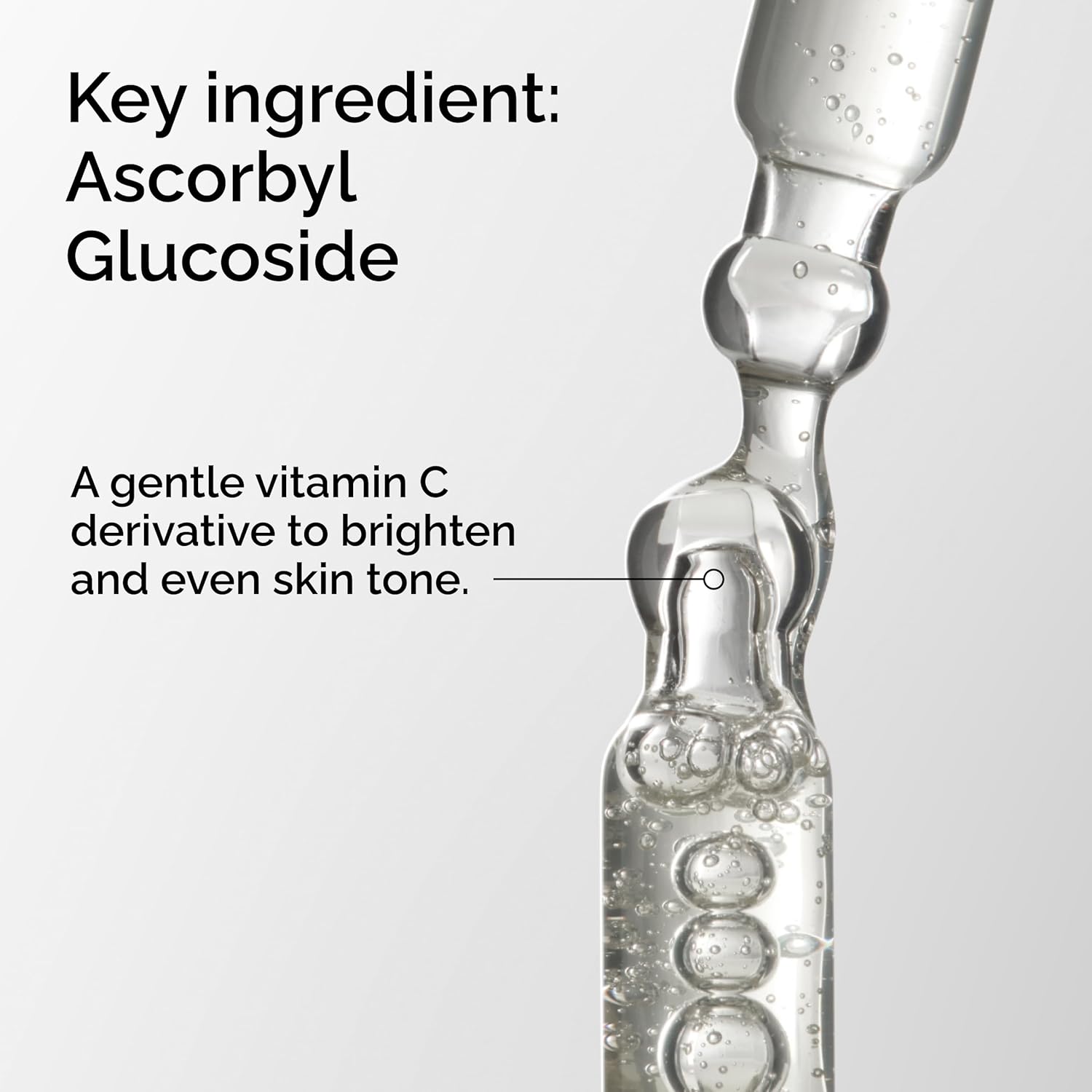
The Ordinary Ascorbyl Glucoside Solution 12% is the entry point most cosmetic chemists point newer formulators toward when pure L-ascorbic acid (the most studied form of vitamin C, but also the most unstable and pH-sensitive) isn’t practical at a low price. Ascorbyl glucoside is a vitamin C derivative — it converts to active L-ascorbic acid on the skin after absorption. It’s more stable, less irritating, and more compatible with a wider pH range than pure vitamin C. Byrdie’s roundup of drugstore vitamin C serums notes that The Ordinary’s ascorbyl glucoside formula consistently draws praise for tolerability among users who’ve been burned (literally or figuratively) by high-concentration pure vitamin C formulas.
The tradeoff you need to name explicitly: derivative ≠ identical efficacy to L-ascorbic acid at a clinical dose. Conversion rates are partial, and Healthline’s overview of vitamin C serums notes that L-ascorbic acid at 10–20% remains the gold standard in published efficacy studies. If you’re managing active melasma rather than mild post-acne marks, this is a real limitation. But for general tone-evening and antioxidant protection, the derivative performs — and at ~$7, the stability advantage actually matters more than it does at $180, where brands can afford airless pumps and antioxidant-stabilizing formulas.
Packaging note (a site obsession worth respecting here): Vitamin C oxidizes when exposed to air and light. Oxidized vitamin C serum turns orange-brown and loses efficacy. The Ordinary ships this in a dark glass dropper — not ideal for long-term stability, but acceptable given the low price point and short projected use window. Buy one, use it within 60–90 days, store it in a cool drawer. Don’t stockpile.
~$7 → [PRODUCT:The Ordinary Ascorbyl Glucoside Solution 12%:budget]
Niacinamide — The Workhorse (Budget: ~$8–$10)
The Ordinary Niacinamide 10% + Zinc 1% is effectively the category anchor in the budget tier. Paula’s Choice Expert Advice notes that niacinamide works by interfering with the transfer of melanosomes (pigment packets) from melanocyte cells to keratinocytes — the result, over consistent use, is a more even distribution of pigment. The Beauty Brains’ analysis of niacinamide’s brightening mechanism corroborates that 5% concentration is the threshold where clinical studies see statistically significant improvement in hyperpigmentation; The Ordinary’s 10% formulation clears that bar.
The zinc component (zinc PCA) helps regulate sebum — which makes this a dual-purpose win if you’re also managing oily or acne-prone skin. It also introduces one known interaction to flag: high-concentration niacinamide and high-concentration pure L-ascorbic acid can theoretically form niacinamin when mixed, slightly yellowing the skin temporarily. At derivative vitamin C concentrations like ascorbyl glucoside, this is far less of a concern. Still: apply them at different times of day if you’re unsure — vitamin C in the morning, niacinamide at night — and you sidestep the question entirely.
~$9 → [PRODUCT:The Ordinary Niacinamide 10% + Zinc 1%:budget]
SPF — The One You Cannot Skip (Budget: ~$8–$12)
This is where budget-tier routines most often collapse. Spending $17 on actives and zero on sun protection is not a brightening routine — it’s a frustration loop. Every UV exposure undoes melanin suppression and triggers new pigment formation. The American Academy of Dermatology is unequivocal: SPF is the foundational step in any hyperpigmentation management plan.
At the sub-$12 price point, EltaMD UV Clear Broad-Spectrum SPF 46 is out of budget (it runs ~$40). What holds up at this tier:
- CeraVe Hydrating Sunscreen SPF 50 Face Lotion (~$12–$15, but often on sale around $10–$11) — mineral/chemical hybrid, non-comedogenic, includes ceramides for barrier support. Reviewers on Allure’s SPF roundups consistently cite it as a standout for the price.
- Neutrogena Clear Face Liquid Sunscreen SPF 55 (~$10–$12) — oil-free, chemical SPF, well-regarded in dermatology-adjacent reviews for daily urban use.
~$10–$12 → [PRODUCT:CeraVe Hydrating Sunscreen SPF 50 Face:budget]
Optional Exfoliant — The Multiplier (Budget: ~$0–$7)
If you have budget headroom after the three core products, a gentle chemical exfoliant 2-3x weekly accelerates turnover of pigmented cells. The Ordinary Glycolic Acid 7% Toning Solution ($9) or — for more sensitive types — The Ordinary Lactic Acid 5% + HA ($7) are the standard recommendations in this tier. Lactic acid is an AHA with a larger molecular size than glycolic, meaning slower penetration and lower irritation risk. Either earns its place in the stack if your budget allows.
If you are already at or near $30 before this step, skip it for now. The SPF is more important than the exfoliant. That is not an opinion — it’s the order of operations that dermatology consensus supports.
The Math
| Product | Approx. Price |
|---|---|
| The Ordinary Ascorbyl Glucoside Solution 12% | ~$7 |
| The Ordinary Niacinamide 10% + Zinc 1% | ~$9 |
| CeraVe Hydrating Sunscreen SPF 50 Face | ~$10 |
| Core stack total | ~$26 |
| Optional: The Ordinary Lactic Acid 5% + HA | ~$7 |
| Full stack total | ~$33 |
At current 2026 pricing, the core three-product stack lands at roughly $26. The optional exfoliant pushes it slightly over $30, which is a real call you have to make. The decision rule: if you’re targeting active post-acne marks or sun spots, get the exfoliant. If you’re managing melasma or reactive/sensitive skin, stay at three products and let the niacinamide do its work slowly.
Realistic Timelines — Because Someone Has to Say It
Allure’s brightening serum coverage and Byrdie’s ingredient-focused reviews both note a consistent pattern: users reporting visible improvement in post-acne marks typically see early changes at 8–10 weeks of consistent use. Melasma, per the AAD’s treatment guidance, is slower — expect 3–6 months of SPF-strict, daily-active use before meaningful reduction. At any budget level.
This is important context when you’re evaluating a $30 stack against an $88 one. The performance gap between these two setups is real — mostly in delivery system sophistication, texture, and the comfort of a more elegant formula — but the timeline gap is smaller than marketing implies. If you put in the 90 days with this stack, wearing SPF every day without exception, you will have enough real-world data to decide whether you’ve solved the problem or whether you need to step up to a mid-tier formula like Paula’s Choice C15 or a more targeted treatment.
The Decision Rule
If X, then Y:
- If you’re a beginner with a tight budget and mild tone unevenness → this stack, as described, for 90 days. Prioritize SPF above everything else.
- If you’ve run a drugstore stack for 6+ months and aren’t satisfied with pace → the limiting factor is almost certainly vitamin C potency or SPF compliance. Step up to an L-ascorbic acid formula (Paula’s Choice C15, ~$49) before adding new actives.
- If you’re managing active melasma → this stack is a maintenance floor, not a treatment ceiling. The AAD recommends discussing prescription-strength hydroquinone or azelaic acid with a dermatologist alongside the OTC stack.
- If budget is the only constraint and results are the priority → the niacinamide and SPF are the two products with the strongest return-on-investment at this price tier. If you can only buy two things, buy those.
The ingredients work. The budget works. The variable is consistency — and that one’s free.