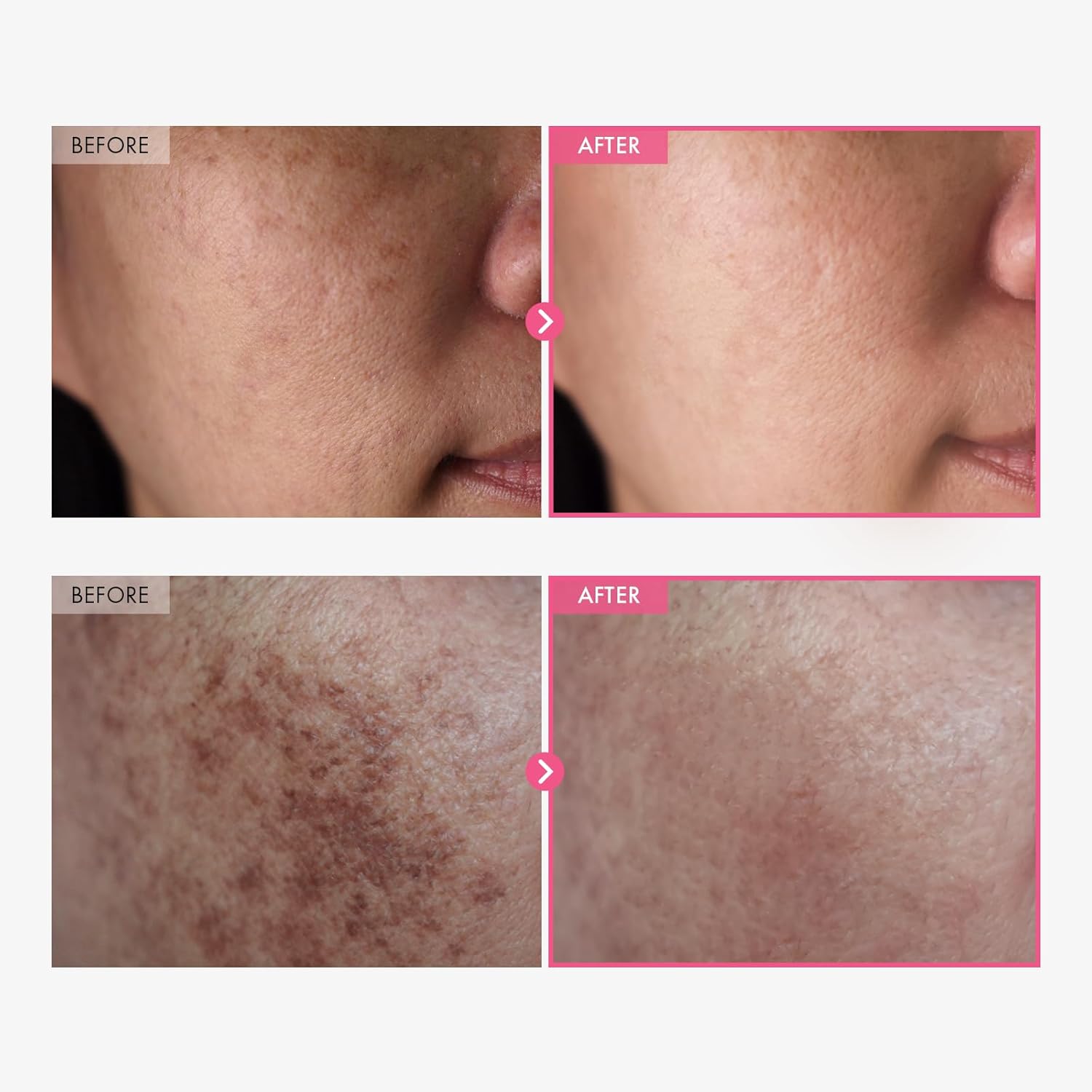
If you’ve ever stared at a serum label and wondered what “arbutin” actually does — or why some products say alpha while others say beta — you’re in good company. Arbutin is a naturally derived compound found in bearberry and certain other plants. It works by gently interrupting the skin’s melanin-production process. Melanin is the pigment responsible for dark spots, post-blemish marks, and uneven skin tone. By slowing down the enzyme — called tyrosinase — that triggers melanin production, arbutin can gradually fade existing discoloration and help prevent new spots from forming. It’s not a chemical exfoliant, not a retinoid, and not vitamin C — it occupies its own quiet category of brightening actives. This article breaks down the difference between the alpha and beta forms, shows you where each one fits into a real routine, and names the tradeoffs worth understanding before you buy.
What Alpha and Beta Arbutin Actually Are
Alpha arbutin and beta arbutin are structural isomers of the same base molecule — hydroquinone glycoside — but their bond geometry differs. That one chemical distinction changes how they behave on skin in ways that formulators and practitioners increasingly treat as clinically meaningful.
Alpha arbutin carries an alpha-glycosidic bond, which makes it more stable in formulation and more slowly hydrolyzed (broken down) in the skin. Because it releases its active fraction gradually, it delivers tyrosinase inhibition with a lower risk of irritation. Cosmetics & Toiletries, in their review titled “Arbutin: A Review of Its Efficacy and Safety as a Skin-Lightening Agent,” consistently identifies alpha arbutin as the higher-potency isomer on a per-weight basis — effective at concentrations as low as 1–2%, with clinical study support up to 4%.
Beta arbutin carries a beta-glycosidic bond. It occurs more abundantly in nature, which historically made it cheaper to source. It is effective, but published formulation data suggests it requires higher concentrations — often 3–7% — to achieve results comparable to alpha arbutin at 1–2%. It also hydrolyzes more readily, meaning it may convert to free hydroquinone more easily under certain pH conditions or with prolonged exposure to light and air.
This is the core tradeoff: alpha arbutin is the more predictable performer, especially in a routine where pH is carefully managed. Beta arbutin is a legitimate and gentle option, but it requires higher loading to compete — and its stability profile demands better packaging.
Paula’s Choice Expert Advice, in their piece “What Is Alpha Arbutin and Is It Safe?”, notes that alpha arbutin is the form supported by the strongest clinical evidence for skin-lightening at safe concentrations, and it is the form found in most premium formulations for exactly that reason.
How Each Form Performs in a Real Brightening Stack
Building a multi-active brightening routine — one that pairs a tyrosinase inhibitor with an exfoliant or a retinoid — turns the alpha-versus-beta question into a decision about where you want your margin of error.
Alpha arbutin pairs cleanly with vitamin C. Both inhibit melanin production through different pathways — arbutin targets tyrosinase directly; vitamin C reduces the oxidized form of tyrosinase and also acts as an antioxidant — so you get additive brightening without overlapping irritation risk. Healthline’s overview “Alpha Arbutin for Skin: Benefits, How to Use, and More” notes that this combination is widely recommended by formulators because the pH ranges are compatible. Both actives prefer a slightly acidic environment (roughly pH 3.5–6), so they can share a routine step or be applied back-to-back without destabilizing each other.
Beta arbutin needs more attention to formulation pH. Because beta arbutin is more prone to hydrolysis at low pH, stacking it with a low-pH vitamin C product or an AHA increases the risk of converting it to free hydroquinone. At the small concentrations involved, this is not catastrophic — but it is a variable you introduce unnecessarily when alpha arbutin is available.
Retinoids sit well with either form, since they are typically applied at a separate step (often at night, after the brightening serum has absorbed). Byrdie, in their piece “Alpha Arbutin Is the Brightening Ingredient You Haven’t Tried Yet,” specifically identifies the combination of alpha arbutin with niacinamide as a widely reviewed brightening pairing. Niacinamide inhibits melanosome transfer rather than tyrosinase, meaning the two actives target different stages of pigmentation formation without competing.
For professional and post-procedure protocols: If you are designing a client routine for post-laser or post-peel care, alpha arbutin is the cleaner choice. Skin that has been recently treated has a compromised barrier and may be more sensitive to hydrolysis byproducts from beta arbutin. The American Academy of Dermatology, in their guidance document “Hyperpigmentation: How to Fade Dark Spots,” consistently emphasizes choosing the gentlest efficacious option for sensitized skin.
Comparison by Tier: Budget, Mid-Range, and Premium
The alpha-versus-beta divide maps closely onto price tier — not because cheaper always means beta, but because the formulation investments that favor alpha arbutin tend to correlate with mid-range and premium positioning. Here is how each tier tends to play out.
Budget Tier
Good
$7.97
In stock on Amazon
Check price on AmazonAt the budget end of the market — roughly $5–$18 — beta arbutin appears more frequently. This is primarily a sourcing-cost story: beta arbutin’s greater natural abundance historically made it less expensive to include at meaningful concentrations. Budget formulas that use beta arbutin at 3–5% in airless or tube packaging can deliver real results. The concern at this tier is twofold: concentration and packaging. A 1% beta arbutin in a standard dropper bottle combines the less potent isomer with the packaging format most prone to oxygen exposure, compounding the stability risk at both levels. The Beauty Brains, in their post “Is Beta Arbutin Better Than Alpha Arbutin?”, note that formulators at this tier often face a choice between loading the less stable isomer higher to compensate or accepting a shorter effective window.
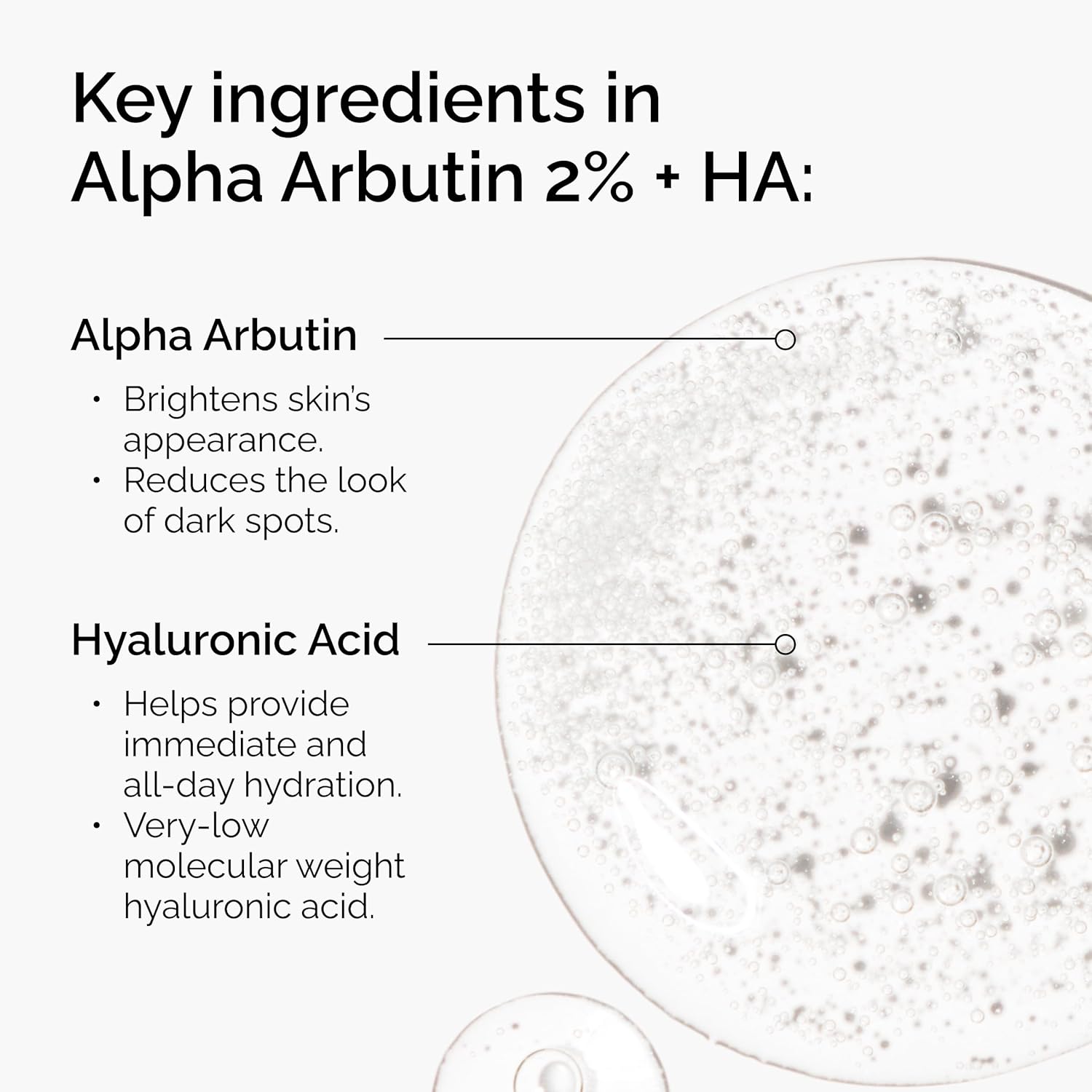
Alpha arbutin does appear at the budget tier — The Ordinary’s Alpha Arbutin 2% + HA serum is the most frequently cited accessible entry point across editorial sources including Byrdie and Healthline — and it represents strong value precisely because the alpha form delivers results at lower concentrations, keeping formula cost down even while using the more refined isomer.
Verdict for budget tier: Alpha arbutin at 2% in an opaque or airless format is the stronger budget pick. Beta arbutin is acceptable at 3%+ in similarly protective packaging; avoid it at low concentrations in dropper bottles.
Good
$7.97
In stock on Amazon
Check price on AmazonMid-Range Tier
The
$11.50
In stock on Amazon
Check price on AmazonAt $20–$65, formulators have more room to combine alpha arbutin with supporting actives. Products in this range — including options from Paula’s Choice and comparable clinical-leaning brands — often pair alpha arbutin with niacinamide, hyaluronic acid, or low-level tranexamic acid. The delivery systems tend to be more sophisticated: silicone bases for slip, packaging that limits oxidation exposure, and concentration ranges (2–4% alpha arbutin) that sit at the well-studied upper end of the efficacy window described in the Cosmetics & Toiletries arbutin review.
Beta arbutin formulas also occupy this tier, particularly in brands with botanical or natural-positioning. At 5–7% in a well-packaged format, they are competitive — but they require more consumer vigilance about packaging and storage conditions. Paula’s Choice Expert Advice specifically calls out that stability monitoring is a formulation priority for any arbutin product, and the beta form’s greater hydrolysis sensitivity makes that more consequential at this tier than at the premium tier, where packaging investment tends to be higher.
Verdict for mid-range tier: Alpha arbutin formulas at 2–4% with niacinamide or vitamin C pairing offer the best value for multi-active brightening at this price point. Beta arbutin at 5–7% in airless packaging is a reasonable alternative if a specific formula’s reviews confirm consistent performance over the full bottle life.
The
$11.50
In stock on Amazon
Check price on AmazonPremium Tier
TOSOWOONG
$25.00
In stock on Amazon
Check price on AmazonAt $70 and above, alpha arbutin typically appears as a supporting brightener within comprehensive multi-pathway systems rather than as a standalone active. Clinical-brand formulations at this tier often combine alpha arbutin with tranexamic acid, kojic acid, or azelaic acid derivatives — each targeting a different point in the melanin-production or transfer cascade. The Beauty Brains have written that formulators at this level prefer alpha arbutin specifically because its stability profile is more predictable across a product’s full shelf life, which matters when a client is paying premium prices and expects consistent performance from the first pump to the last.
Beta arbutin is largely absent at this tier. When a brand is investing in premium packaging, clinical validation, and multi-active formulation, the marginal cost difference between the two isomers is outweighed by the formulation and marketing advantages of using the more evidence-supported form.
Verdict for premium tier: Alpha arbutin in combination with a secondary brightener (tranexamic acid or niacinamide) represents the current clinical standard at this price point. The Cosmetics & Toiletries arbutin review supports multi-pathway inhibition as meaningfully more effective than single-pathway approaches for moderate-to-significant hyperpigmentation.
TOSOWOONG
$25.00
In stock on Amazon
Check price on AmazonThe Packaging Factor
Arbutin stability is a quieter issue than vitamin C oxidation but follows the same logic. Both forms are light-sensitive and degrade with repeated air exposure. Alpha arbutin is meaningfully more stable, so a standard dropper bottle loses less potency over its use cycle. Beta arbutin formulas in dropper packaging compound the risk: a less stable isomer delivered through the most exposure-prone packaging format accelerates active degradation throughout the product’s life.
The Cosmetics & Toiletries review of arbutin efficacy and safety touches on this directly, noting that the beta form’s higher hydrolysis rate makes airtight, opaque packaging a functional necessity rather than a marketing preference. Airless pump or tube format is the minimum packaging standard for any beta arbutin product being recommended to a client. For alpha arbutin, airless is still preferable — but the stakes of a packaging shortcut are meaningfully lower.
Decision Framework
If the goal is maximum reliability in a stacked routine: Choose alpha arbutin. Its lower effective concentration, better stability, and cleaner pH compatibility with vitamin C and niacinamide make it the lower-risk active for most multi-step protocols.
If budget is the primary constraint: Beta arbutin formulas are often cheaper and still effective — provided the concentration is at least 3% and the packaging is airless or tube-format. A 1% beta arbutin in a dropper bottle is not a meaningful active at any price.
If designing a post-procedure or sensitized-skin protocol: Default to alpha arbutin. Avoid introducing the hydrolysis variable when the barrier is compromised. The American Academy of Dermatology’s guidance on hyperpigmentation supports choosing the gentlest efficacious option for recently treated skin.
If recommending a single-ingredient brightener for a minimal routine: Alpha arbutin at 2% fits almost any skin type, carries no morning-versus-night timing restrictions, and can be worn under SPF without issue. It is the most straightforward “add it and stop thinking about timing” brightener at the clinical recommendation level.
If a client is already using hydroquinone under dermatologist supervision: Arbutin in either form overlaps in mechanism. Stacking both does not produce meaningful additive benefit — the tyrosinase pathway is already addressed. Arbutin is most useful as a hydroquinone alternative during maintenance phases or for clients who cannot tolerate HQ.
The Bottom Line
Alpha arbutin is the more refined tool: higher potency per percentage, better stability, cleaner formulation compatibility, and a stronger published evidence base, as documented in the Cosmetics & Toiletries arbutin efficacy review and supported by Paula’s Choice Expert Advice’s clinical summary. Beta arbutin is a genuine and gentle brightener — not a scam, not a knockoff — but it asks more of the formulation and the packaging to deliver equivalent results.
At the practitioner level, the choice comes down to where you want to absorb uncertainty. Alpha arbutin minimizes that uncertainty at every tier of the stack. For most routines, that makes it the default recommendation — with beta arbutin as a reasonable alternative when a specific formula’s concentration, packaging, and formulation context check out on all three variables simultaneously.
The pigmentation timeline is a long one. The American Academy of Dermatology’s guidance on hyperpigmentation places realistic fading timelines at three to six months of consistent use. Choosing the more stable, more predictable isomer is one of the smaller decisions that quietly compounds across that window.